
In this illustrative essay, the first-person account is imagined and the accompanying image is AI-generated.
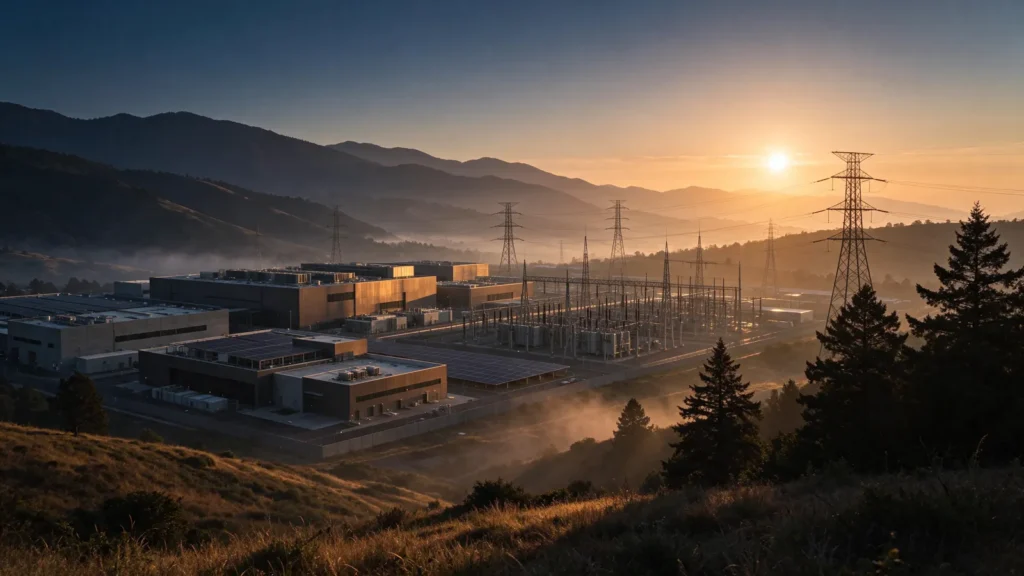
At two in the morning in the fourth winter of my second company, I stood on a loading dock outside a mid-sized logistics business and watched our palletizing robot drop the same box for the eleventh time. The software was fine. We had tested the grasp-planning code for months. The problem was that the concrete slab sloped about a degree and a half toward the drain, the overhead sodium lamps flickered at a frequency our cameras disliked, and the cardboard came off trucks that had sat in freezing rain. None of that appeared in our pitch deck.
Fixing it took six weeks, two engineers sleeping in a motel near the interstate, and a redesign of our mounting plate. It was miserable, and it was also the most valuable thing that happened to the company that year. A competitor had raised more money than we had on the strength of a beautiful demo video. Eighteen months later they were gone. We were still running in that building, and in nine others like it, because we had learned what a real dock does to a machine.
I think about that night often now that I sit on the other side of the table. It captures something I believe is about to matter a great deal to anyone allocating capital in technology: the value is migrating back down the stack, toward the things that are hard to build, slow to deploy, and nearly impossible to copy from a screenshot.
The Feature Has Become the Cheapest Part of the Product
For most of the last fifteen years, the dominant venture model rewarded a specific shape of company. Build a software product with near-zero marginal cost, find a wedge, grow fast, and let network effects or switching costs do the defending. That model produced extraordinary returns, and I don’t dismiss it.
But something has changed in the economics of building software. A team of three can now produce, in a few weeks, what took a team of thirty a year when I started my first company. Code generation tools, mature open-source components, and commodity cloud services have compressed the cost of shipping a feature toward zero. That is wonderful for customers. It is less wonderful for anyone whose valuation rests on a feature set.
When the cost of building drops, the cost of copying drops with it. I now see pitch decks every week where the core product could plausibly be replicated by a well-funded incumbent in a quarter, or by a sharp competitor in a month. The founders aren’t wrong about the problem. They are often wrong about how long their answer will remain theirs.
The question I keep returning to is simple: if the software layer is becoming abundant, what becomes scarce?
My answer, after fifteen years of building things that had to survive contact with weather, physics, and procurement departments, is infrastructure. By that I mean the physical and operational systems that software depends on but cannot conjure: power generation and storage, grid interconnection, compute capacity tied to real energy contracts, sensing and actuation hardware, autonomous systems that work in unstructured environments, industrial supply chains, and the deployment know-how to install all of it in places that were never designed for it.
Why Infrastructure Returns Look Bad Until They Don’t
Every investor who has looked at hardware or infrastructure knows the objections. The capital requirements are high. The timelines are long. Gross margins in the early years look ugly next to a software comparable. Units break. Customers pilot for eighteen months and then ask for another pilot.
All of that is true. My first company took 41 months from first working prototype to first repeat order. My second burned through roughly two-thirds of its Series A on field deployments that a spreadsheet would have called inefficient. If you had marked either company to a software multiple at year three, you would have written them down.
What the spreadsheet missed was what those years were buying. Each deployment taught us something a competitor would need to learn the same way: by putting machines in real buildings and watching them fail. By the time we sold the second company, we had a library of several thousand documented failure modes, a set of installation procedures that cut site setup from three weeks to four days, and relationships with facilities managers who trusted us because we had answered their calls at night.
The slow years are not a tax on the business. They are where the moat gets poured.
This is the pattern I now look for. Infrastructure businesses tend to show poor returns for a long stretch and then compound steadily, because the advantages they accumulate are physical, contractual, and experiential. A signed interconnection agreement, a permitted site, a certified safety case for an autonomous vehicle, a supply relationship for a constrained component: none of these can be cloned. They have to be earned, and earning them takes time that a fast follower cannot buy.
The mirror image is also true. Many software businesses show excellent early metrics and then flatten as copies arrive and pricing compresses. The return curve is front-loaded. In a world where software is getting cheaper to make, I expect more of those curves to bend earlier.
What Patient Capital Actually Means on a Cap Table
“Patient capital” gets used loosely, often as a polite way of saying “we will be slow to give you money.” I mean something more specific, and it shows up in concrete decisions.
First, it means fund structures and reserve strategies that assume a company will need meaningful capital before it shows software-like efficiency. When I evaluate an infrastructure company now, I model at least two financings between first deployment and clear unit economics. If a fund cannot support that, it should not be in the deal, and the founder should know that before signing.
Second, it means measuring progress with different instruments. Annual recurring revenue growth is a poor early signal for a company installing physical systems. I care more about deployment cycle time, cost per installation over successive sites, mean time between failures in the field, and the ratio of unplanned to planned site visits. These numbers tell you whether the company is learning. Revenue tells you, eventually, whether the learning was worth something.
Third, it means mixing capital types honestly. Some of what an infrastructure company needs is not venture money at all. Equipment can be financed. Project-level capital can carry deployments once performance is proven. Customer prepayments and offtake agreements can fund production. One of the most useful things an early investor can do is help a founder avoid spending expensive equity on assets that cheaper capital would happily fund. At my second company, moving our deployed fleet onto an equipment facility in year five reduced our dilution in the next round by what I estimated at eight to ten points. Nobody had suggested it earlier because nobody around the table had done it before.
Fourth, and this one is harder, patient capital means emotional patience in board meetings. I have watched investors push infrastructure founders to chase a growth curve that the physical world could not support, and I have watched those companies break their own field operations trying to comply. Pressure to grow is healthy. Pressure to grow faster than your installation teams can learn is how you end up with a fleet of machines that all fail the same way at the same time.
A Five-Question Test for Infrastructure Bets
When I sit down with an infrastructure or autonomous systems company, I work through five questions. They are not a scoring rubric. They are a way of finding out whether the company is accumulating something durable or simply spending money slowly.
- What does each deployment teach you that the last one didn’t? I want a specific answer, ideally with examples from the field. If the tenth site looks operationally identical to the first, the company is not learning, and its costs will not come down.
- Which of your advantages would survive a competitor with twice your funding? Code rarely survives this question. Permits, interconnection positions, safety certifications, long-term supply contracts, and installed-base data often do.
- What is the cheapest capital that could fund your next hundred units? If the answer is always equity, the founder has not yet separated the risky part of the business from the financeable part.
- Who has to say yes for you to deploy, and how long does each yes take? Utilities, regulators, insurers, unions, facilities teams. Mapping this tells me the real timeline far better than a sales pipeline does.
- What happens to your customer if you disappear? In good infrastructure businesses, the answer is uncomfortable for the customer. That discomfort is a form of retention no feature can replicate.
A company that answers these well does not need perfect metrics yet. A company that answers them poorly is usually telling me its moat is a story rather than a structure.
Where I’m Looking, and Where I’m Not
I’ll be specific about how this thesis shapes my own work, because general statements about “infrastructure” can mean almost anything.
I am spending most of my time on three areas. The first is the physical layer behind compute: power delivery, cooling, on-site generation and storage, and the scheduling systems that tie compute demand to energy availability. The appetite for computation is real, and it is running into constraints that are measured in megawatts and permitting queues, not lines of code. The second is autonomous systems operating in messy, bounded environments: yards, ports, mines, agricultural sites, construction. These are places where the work is repetitive, labor is scarce, and the operating conditions are hard enough that a company’s field experience becomes its defense. The third is industrial supply chains for components that are currently constrained, particularly in sensing, power electronics, and motion control.
I am spending less time on application-layer software that sits on top of shared models and shared cloud services, unless the company owns something physical or proprietary underneath: a data source no one else can collect, a deployment footprint, a regulated position. I am also wary of hardware companies whose plan depends on a single large customer pilot converting on schedule. I have lived through that plan. The pilot always takes longer.
None of this means software stops mattering. The best infrastructure companies I know are excellent software companies too. Their code is simply anchored to something that cannot be downloaded.
If you are a founder building in this space, document your field failures as carefully as your wins, and bring them to your next investor meeting. If you are an investor, ask to see a deployment in person before you ask to see the dashboard. Stand on the loading dock. Watch what the weather does to the machine. That is where the returns of the next decade are being decided, one slow and unglamorous installation at a time.